

Reflections on Working Remotely

Episode 35

Without a doubt we are facing the largest global disruption in generations. A sense of normalcy is not likely to return anytime soon. Humanity faces one of its greatest tests of social coordination requiring all of us to exercise individual self-control. This virus attacks the very nature of what makes us human, our ability to come together. However, our success as a species was derived from our adaptability, and now, we must adapt to working together, but apart. While numerous businesses and institutions have closed, the ones that can remain open have gone remote or radically shifted how they operate to ensure employee and public safety. Since March, MERAK’s office has been closed and we all have been continuing to work from the comfort of our homes. This blog will reflect on what I have learned over the last four months.

Scott Works Remotely From His Roof

With modern cloud infrastructure, working remotely is seamless. I cannot imagine if this pandemic happened a decade earlier. I consider myself very fortunate with a dedicated home office space. For others, workspaces were set up where space was available, but over time, offices shifted from living rooms and kitchen tables to repurposed rooms. For myself, the walk from bed to office is about 30 feet, traffic consists of navigating around hungry cats, and a bonus dedicated parking space. Overall working from home gives me about 30 to 90 minutes of extra time each day that would have been spent commuting, by car or bicycle, respectively. My car has had the same tank of gas since February! The dress code has been comfy shorts. The freedom has had some cost, as extra time is largely spent at my desk to make up for time spent distracted, and due to the ease of work access I find it is very easy to get into the trap of, “this should only take another 20 minutes”, then spending the next hour cleaning up tasks that could have been dealt with tomorrow.

The largest shift has been most felt in the daily interactions with my colleagues. One benefit of working in the office was the casual conversations. Since the office closure, communication has narrowed to interaction with only direct collaborators. Communication is either through text chats or video calls. To help facilitate conversations MERAK has set up two informal meetings throughout the week. At each lunch hour there is an open meeting available to all staff and more recently a Friday afternoon happy hour. Because communication was largely through video calls, the lunch hours were initially work conversations and it has taken several months to emulate the more open and casual conversations that were common during lunch at the office.

Brett Wearing Multiple Different Hats

Working remotely has given a new window into the lives of my colleagues. Pets and children occasionally join in on the conversation as pleasant distractions during unpleasant times. Hilarious moments of panicking toddlers, surprise entrance Roombas, and hyper animals buzzing past the camera’s field of view has cut the edge off. However, I have noticed that a day heavy with video meetings is more draining than in person meetings would have been.

There have been rising expectations in video call quality over time. Low quality laptop mics have been replaced with headsets, no more noisy laptop fans, upgraded HD webcams, hardline connections instead of Wi-Fi, repairs to squeaky chairs, and upgrades to fibre internet are all updates I have seen. Reflections on workspace ergonomics were noticed quickly, and more than one office chair has been rehomed. If digital backgrounds are not utilized, what is displayed behind the worker is a fashion statement and is as common a point of opening conversation as the weather.

More recently there has been reflection on normalizing a healthier daily habit. As a PC gamer, I have noticed over the last few months that both my work and hobby have me spending my whole day at the same desk. I have the best headphone hair! I find both work and my hobbies rewarding, and while excellent for social isolation are a daily practice that is not sustainable long term. As a result, I have been exploring other ways to spend my leisure time that still practice responsible behavior during this pandemic.
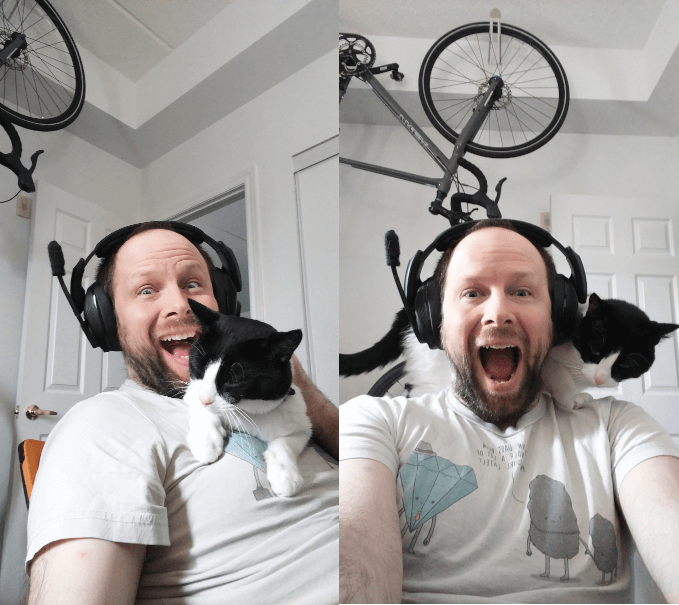
Tuxedo Cat Balancing On Shoulders

With numerous organizations making announcements that remote work will be a permanent option it begs the question, how will working at home change? For instance, with two working parents, do typical homes have the right configurations for two remote professionals and children? Multiple offices, ethernet wired to every room, and good noise control comes to mind. With schools closed (possibly again in the fall), parents are forced to take shifts between watching children and working, which stretches the working day. Even at the office, getting in a few good hours of distraction free work can be a challenge at the best of times, with small children this is a near impossibility.

While MERAK has no intentions of fully re-opening the office, there have been discussions of setting up a system of limited availability, allowing staff to get in a more focused day. At the same time, leasing office space to only be used at 20% capacity or less is silly. With the pandemic far from over, I have no doubt that both a willingness and ability to adapt will be critical going forward. The best we can do is make the best of the situation, learn and adapt, and look out for each other.


Failure is Okay

Episode 34

Our economy is driven by knowledge. Top firms derive their competitive advantage directly from the intellectual property they control, and the institutional knowledge held by their employees. Knowing how to do something our competitors cannot is a powerful differentiation tool as discovery is a messy process with numerous setbacks and dead ends. However, I argue that it is okay to take risks to learn something new. Failure should not be looked upon negatively but acknowledged as a routine process within any innovation pipeline.

Being good at what is already known is not good enough. What is already known can be commodified, which leads to little opportunity to differentiate with the scope of competition narrowing down to price. This is clearly shown in the smartphone market which has not seen much in product innovation for several years. Top end phones have largely seen incremental improvements in processor speed, memory size, and peripheral quality, and as a result, consumers have been increasingly reluctant to upgrade as quickly as they once did.

Mistakes and failures do not mean that you or your organization is a failure. A common saying is “fail fast and fail often”. The goal when innovating is to discover as quickly as possible what does not work and move on with a different test with a better set of assumptions. The idea of “disruptive innovation” or “move fast and break things” is overused but should not be completely discounted. It is important to ask questions like: “what processes, products, or technologies if possible, would completely overturn our business model or industry?” While the entire organization does not need to be devoted to answering such a question, it is important to allocate some resources to prepare for disruption, or better yet, be the instigator of disruption if investments prove successful.

Scorched Rocket Sits On A Launch Pad

Discovery is exciting, and accomplishing a hard task is very rewarding. Employees engaged in innovative practices will have far greater satisfaction than those stuck in the tedium of repeated tasks best suited for automation. Knowledge is grown through learning what does not work. There are numerous examples of successful innovations that took multiple iterations before success was found. After 40 attempts to produce a degreaser and rust protection solvent WD-40 was born. Bubble wrap was initially developed to be a textured wallpaper. Did you know there are many ways on how to not land an orbital class rocket booster? Just look back at the last time you tried to do something new for the first time: did it work out perfectly the first try?

To move forward from failure, you need to purge “blame culture” from your organization. If employees fear making mistakes, the culture will encourage unproductive behaviors like hoarding true knowledge, hiding negative results, and general avoidance of risk taking. Watch out for the sunk cost trap, failing to abandon the wrong path will only slow innovation. For several years, I was a Day Trader. Proper risk management is critical to staying in the game over the long haul. You cannot win if you do not make bets. You cannot bet if you run out of cash. When driving innovation, it is important to manage the amount of risk the organization assumes at one time. Moonshots are a good anchor, but do not forget to map the steps in between to give employees a realistic path to work with.

Planned Disasters to Build Resiliency

Episode 33

It has been said many times, change is hard. Establishing a solid process requires a lot of growing pains. There is a special feeling we all get when things just work. At the same time, change is necessary. If you get too comfortable, over time a culture of rigidity develops. “This is how we have always done it.” Organizations will typically respond to changes in the external environment, with proactive organizations not letting change force their hand. However, for some organizations, change only comes when there is a crisis. It is best not to wait for a crisis, but sometimes they happen, and often we are surprised when tasks that used to take weeks are done in days. However, instead of waiting for the next disaster to be the catalyst for change, let’s engineer changes in a controlled way to build organizational resiliency.

COVID-19 has shown us which organizations had the leadership and cultural capacity to rapidly pivot their business model to remain relevant in one of the most disruptive events of our lifetime. My heart goes out to the organizations within non-essential hospitality and service sectors whose businesses are entirely dependent on close contact with their clients. Many of us in the office dearly miss live sports and music which will not return to normal anytime soon.

Despite the tragedy, there are numerous stories of organizations pivoting nearly overnight by traditional standards. Auto-makers switching production lines to produce ventilators, sign makers producing face-shields, family doctors performing video calls, fitness instructors streaming work-outs on video game platforms, realtors using 3D cameras to provide full VR home showings, entire offices moving to fully remote, retailers shifting to online and curbside pickup, restaurants switching to take out, and emerging solutions to keep us entertained like Jelle’s Marble Runs. 2020 has been an extraordinary year and eventually the worst will be behind us, but that does not mean adaptation or innovation should have a rest.

A Marble Display Shows Various Shooters And Alleys In A Blue Plastic Rack With A Sign Reading &Quot;Marblelympics&Quot;

When we have had time to catch our breath, there is an opportunity to take a more engineered approach to change management and organizational resiliency. Every organization is going to be different but consider the services your organization uses. Consider the suppliers it is dependent on, or critical pieces of infrastructure both internally and externally. Critical service failure, loss of internet access, ransomware attack, cloud provider failure, supply outage, or an infrastructure failure are all possible situations to plan for. Situation discovery, contingency planning, and event preparation are the critical first tasks. At this stage, everything is based on assumptions that need to be tested, and there is no better way to find errors than to run a simulation day and execute on a planned disaster. Lessons learned from a live simulation are invaluable and potentially life saving. Then follow up with a repeat of the simulation or introduce a new mode of failure.

Disasters are disruptive and stressful, so we caution not to overuse such a practice. It is important to be aware that failure should be expected, heroes can be celebrated but solutions should not rely on heroics. The emphasis is on creating failure in controlled situations, allowing people to talk to each other, learn who they need to reach out to, what they need to do, coordinate outside their team, and build relationships throughout the organization. Ultimately the response to disaster will feel routine (but everyday should not feel like a disaster), as true resiliency does not require extraordinary reactions to mitigate a surprise.

When the Business is the Bottleneck

Episode 32

Both manufacturing and software development have seen rapid evolution over the past few decades. Principles within Lean Manufacturing, Agile Development, and DevOps have driven organizations to dramatically reduce the time it takes to bring new ideas to market and respond to market changes. Typically, there is a division between individuals responsible for determining a vision / strategy (the business) and individuals responsible for the operations and technical know-how (development / operations) to execute. For most organizations, the technical environment has been the bottleneck and business has had to set decision making processes to match pace. If your organization is used to development between quarterly to annual cycles, business can quickly become the bottleneck when releases are going out daily.

First off, having business as the bottleneck is favourable compared to development or operations. In many ways, this is a good problem to solve. But to get into this situation, some organizations will need to undertake a transformation that will impact people, processes, and technology. There are several ways to attack this problem and thankfully we have a ton of previous blog content on the subject. I would recommend looking at the change management tag for useful ideas.

Ok, so development or operations is waiting on business to decide, slowing progress; what can be done? First off, time to celebrate. To get to this stage is a significant challenge and it is important to acknowledge all the hard work that was undertaken. Now it is time to apply the same Lean and Agile principles to the strategic planning process. Two popular frameworks that have been used to great effect are the Business Model Canvas and Objectives and Key Results (OKR). Both frameworks have their origins in the technology start-up sector and contain numerous hard-earned lessons.

A Digital Dashboard Showing Various Business Intelligence Information Pieces

The Business Model Canvas is a strategic plan in dashboard form. The goal is to make visible assumptions and find answers through testing using a process that resembles the scientific method. The result is the development of an internal practice of continuous testing and truth seeking; and rapid abandonment of poor assumptions. This system provides agility as the focus shifts from analysis to testing, dramatically shortening the time required to derive an insight compared to traditional market research practices.

Objectives and Key Results is a priority management and performance measurement system designed to drive operational and strategic transparency, and accountability through the organization. An objective will state what is to be achieved and a key result are the benchmarks by which an objective is accomplished. It is important the key results are selected carefully so that they are time-bound, specific, and measurable to ensure that when a key result is hit, there is no ambiguity that the organization has moved closer to completing a stated objective. This system provides agility as struggling areas will stand out; therefore, resources can be quickly allocated to support the struggling area, or priorities can be adjusted based on progress on key results.

The last element to consider is governance. In development, the more hand-offs the more time required to take an idea to the product stage. The same goes for decision making. The greater separation decision makers are from the user/client, the more business cases, review meetings, etc. are required to get stakeholders up to the required knowledge for a decision to be made. Quality decisions are much like quality code; better quality code is produced when the responsibility for quality is pushed upstream to the developer, instead of a responsibility left for someone else later in development. Quality decisions made by those closest to the client are higher quality. Distributed decision making is a scary concept for many organizations and such a system is not without its flaws. However, with the visibility provided by frameworks like the Business Model Canvas and Objectives and Key Results, the enhanced visibility of a system to all involved allows for errors in the system to be made visible far earlier and corrected quickly.

Expert Versus Learning Systems

Episode 31

Artificial intelligence-based (A.I.) technologies are all the rage. The pervasiveness of A.I. solutions have reached down into the minds of laypeople. I have had numerous conversations with individuals that look at an internal process within their organization and ask, “can we add A.I. to this?”. The push to “A.I.-ify” everything without fully understanding the technology’s limitations or requirements can put a damper on progress. There is a strong push to democratize expert knowledge throughout an organization using A.I.. This blog will cover expert and learning systems two common methodologies for constructing intelligent systems.

Expert systems are a branch of artificial intelligence, where subject matter experts encode their knowledge within a system that attempts to imitate the reasoning and advice of the expert. Expert systems work best with specific activities or problems calling upon a database of rules and models. The core task in developing an expert system is in the creation of the knowledge database followed by the development of an inference engine that contains all the processing rules and logic. When successful, an expert system can distribute human expertise widely, providing increased consistency, accuracy, and reliability as users are working with a single source of truth. Surprisingly, it is likely that we have all developed and used an expert system when we built or used a spreadsheet to aid in a decision-making process. The costs in developing an expert system can vary dramatically. Expert systems require highly trained specialists and, depending on the field, these resources can be expensive, as well as to develop expertise. Expert systems require continuous upkeep with costs scaling non-linearly with complexity. The challenge with expert systems is that not all knowledge can be codified in a way that is understandable by machines. For instance, how do we write rules for machines that explain empathy or common sense?

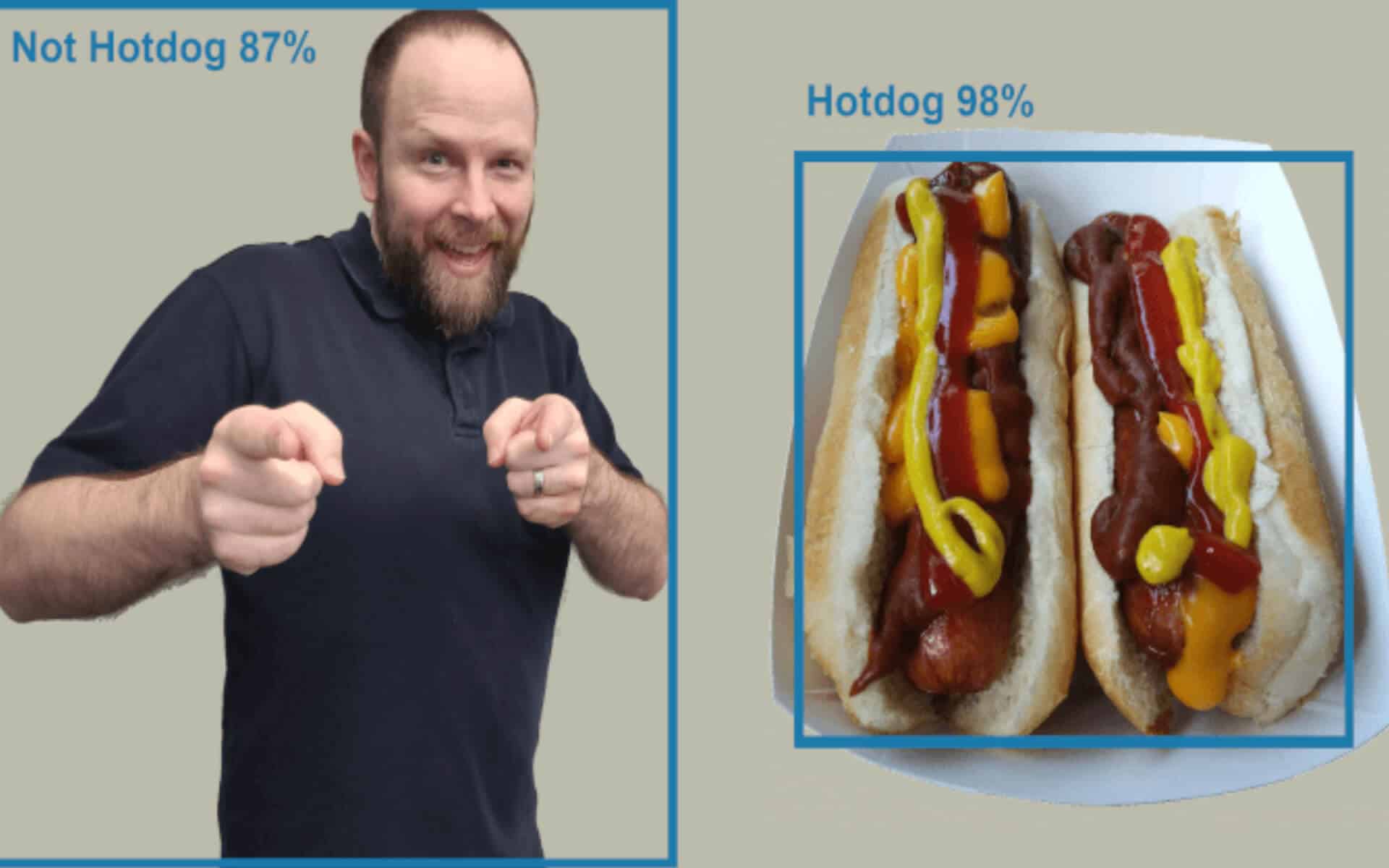
Ai Detecting If A Human Is A Hotdog

Learning systems, commonly referred to as Machine Learning systems, are computer algorithms that improve automatically through experience. Learning systems require training data to make predictions. Learning systems discover how to perform tasks without explicitly being programmed to do so, which is in contrast to expert systems, where the behavioral rules are hard coded during development. With learning systems, training data is an absolute requirement, without good training data the resulting model will be ineffective. Two common uses we see learning systems deployed for are recommendation engines and classification systems. Expert systems would have a hard time, compared to current day machine learning models, suggesting your next purchase on Amazon or the next series to binge on Netflix. Great recommendations factor in thousands of variables. Humans are great at classifying. It is effortless for us to recognize a cat, dog, or hotdog, however, teaching a machine is extremely difficult. With enormous amounts of training data and computation, models can be trained to classify objects with high accuracy, which has the potential to revolutionize numerous industries. Recent success in classification systems is a major source of hype. But therein lies the problem with learning systems, as currently the data and computation requirements of industry leading machine learning models doubles every three months! Whether machine learning model development becomes a tool for the masses is unknown; however, it is undeniable that machine learning model use will be ubiquitous.

To summarize, expert systems work best when the environment is discretely definable. Common sense is a uniquely human experience and its translation into software is challenging. Learning systems use the training data to define the decision logic, therefore, currently work best when there is abundance of data and computational resources available. Both methodologies require a deep understanding of statistics, computer science, and the subject being analyzed. In today’s talent environment, individuals that are competent in at least two of these areas are highly desirable and command high wages. Developing internal competencies in Artificial Intelligent systems represents significant investments in both human talent and technology development. Likewise, as more A.I. based services become available for the common public, it is important to have resources within your organization capable of using these resources but understanding the underlying subject to translate and communicate the results.

Innovation Velocity

Episode 30

The 20th Century was defined by Humanity’s control of atoms. The material abundance we enjoy today is unfathomable to those only just a few generations ago. Organizations’ dominated by their ability to acquire, process, and distribute atoms using economies of scale. The name of the game was all about dollar cost averaging investments through greater output. With the invention of computers and later the internet we are in the middle of a second shift where organizations today dominate through their ability to acquire, process, and distribute knowledge at scale. Unlike atoms, knowledge is far more dynamic, requiring organizations to maintain a high innovation velocity, but what does this mean?

Innovation should not be confused with incremental improvement. Improvement focuses on existing elements to reduce waste or defects and increase quality or customer satisfaction, while innovation focuses on developing what has yet to exist. For instance, in the era of flip phones (buttons and simple display), greater impact resilience would be considered an improvement, and a full display touch screen would be considered an innovation. While control of atoms at scale has not gone away, it is more about how these resources are used. Nearly bulletproof, dirt cheap flip phones can be produced in the quantity of billions, but in the era of smartphones, we would not consider organizations that continue to develop and produce cheap flip phones as thriving businesses or industry leaders.

Velocity is described as a rate of change of an object’s position with respect to a frame of reference over time. For the purpose of this blog, let’s consider an organizations’ position as a representation of its knowledge. Innovation Velocity represents how quickly new knowledge can be derived from ideas validated outside the organization. To remain competitive, not only do organizations need to innovate but do so at an increasing velocity.

Many of the great ideas and practices that allowed us to master the realm of atoms can be used to foster innovation into your organization. The Lean Manufacturing movement has much to teach us. Here are some Lean Manufacturing principles that we will use as examples for improving Innovation Velocity:

  • Limit work in process
  • Reduce batch sizes
  • Reduce the number of handoffs

In a factory it was commonly thought that idle equipment missed revenue, so parts were intentionally churned out until there was no more space left to store inventory in process. Excess inventory in process would effectively slow the entire system down as too many resources were allocated to the wrong stations. To limit work in process, it is important to make sure that all work being done in the organization is visible and being prioritized. Providing a productive team with more of the same work can cause issues in other parts of the organization. The same goes for batch sizes, if a particular has a defect, the larger batch size will result in significantly more re-work, slowly the system. The greater number of handoffs introduces not only delays in execution but also delays for feedback to move upstream. Many large projects with numerous independent actors impede knowledge generation. Therefore, consider forming small teams responsible for owning a metric, product, or feature. Then give them the latitude to innovate autonomously, with the team dissolving once a goal has been reached. Or have the team be permanent, but over the product’s lifecycle, acting as support instead of handing off these responsibilities to another group. The greater number of handoffs introduces not only delays in execution but also delays for feedback to move upstream.

Another area in which Innovation Velocity can be accelerated is through the organization’s culture. A “blame culture” within an organization is the Innovation Velocity equivalent of pulling the hand brake. In some firms, employees are punished for mistakes, which incentivizes behaviors that cover-up mistakes and avoid responsibility. Innovation within these environments is extremely challenging as innovation requires experimentation and risk taking. Likewise, the results of any experimentation are likely questionable as unfavourable results are ignored or deleted further weakening the effectiveness of the innovation pipeline.

Fostering a dynamic, disciplined, and scientific approach to experimentation and risk-taking is the goal. Information is actively sought out, messengers are not shot but trained, responsibilities are shared, collaboration between teams is encouraged, failures trigger exploration, identified problems are swarmed, and new ideas are welcomed. It is important to note that inconclusive results are still valuable results. Organizations that perform ten experiments and fail nine out of ten times will acquire knowledge at a far greater velocity than a competitor that was successful with a single experiment.

Custom Development

Episode 29

From time to time, an idea will pop into our heads that is just too good to pass up. Sometimes these ideas turn into a business. But what happens when an idea, now turned into a business, cannot find a productivity software solution that meets their needs? This blog will explore why some organizations choose to develop a custom solution and what to expect.

Why do some organizations choose custom software?

It is common, when iteratively exploring options, that off-the-shelf solutions are the first to be deployed. Software as a Service (SaaS) solutions can be quick and easy to deploy, provide powerful features, and require no upfront capital. In this blog series we have explored the challenges with SaaS solutions and the tricky matching game that is played when selecting and developing SaaS solutions. In short, applications developed to meet the needs of many organizations will not capture the niche requirements of every business. If the application attempts to be fully comprehensive and configurable, the solution will likely come with significant bloat for most users. Striking that balance is an impossible task requiring compromise but what if you are not willing to compromise? Organizations will go custom when their niche requirements are must-have, and the comprehensive solutions on the market require too much configuration and learning resources to be successfully deployed.

Novel ideas are endlessly generated and despite a mature software market, a solution does not exist for some ideas. At MERAK we see two common paths split based on the competencies of the entrepreneur that approaches us. First are organizations that can be considered technology firms, with the features of the application forming their core competencies, best thought of as an app-based business. Typically, they have in-house development staff but require more resources or skills for a short period of time. Differentiation is captured through the custom application. The second would be considered a more “traditional” firm, like a lawyer, engineer, or accountant that developed a unique system for serving their clients better than their competition. Most commonly, the differentiation is captured through a spreadsheet that is taken to the next level as a custom developed solution. In this case the organization’s core competencies will likely be retained in their core business services but enhanced by the technology that is developed.

What are you getting into?

For organizations whose core competencies fall outside the “app-based” business model, the biggest shock to owners is the realization that they are creating a technology business. This is when a critical business decision is required as ownership will need to determine if the application requires development and maintenance to be done in-house or outsourced. Managing human resources is a tricky problem to solve as technology needs are typically not linear. Individuals with working knowledge of the underlying code and architecture are invaluable as learning a new environment takes time, even for the best developers. Contractors provide flexible resources, but availability can be a challenge.

The nice thing about purchasing off-the-shelf software is that the maintenance is managed by the developer; however, with a custom solution, the benefit provided is dependent on maintenance. MERAK has worked with organizations struggling with custom solutions developed many years ago as the application received no maintenance after the initial build. Even the best new cars do not last long without an oil change. A best practice is to allocate roughly 20% of the development budget as annual maintenance to ensure that the application remains secure and responsive to change. Ownership of the application is another key consideration when developing a custom application with a third party. Who will own the source code? Can the developer use the code for other clients? Once initial development has completed, what support will be provided?

Ultimately, custom development is a long-term play. If managed internally, congratulations you are now a technology company. If you decide to outsource, it is best to view your service provider as a strategic partner in your organization’s future success.

New Microsoft 365 offerings and Name Changes

Episode 28

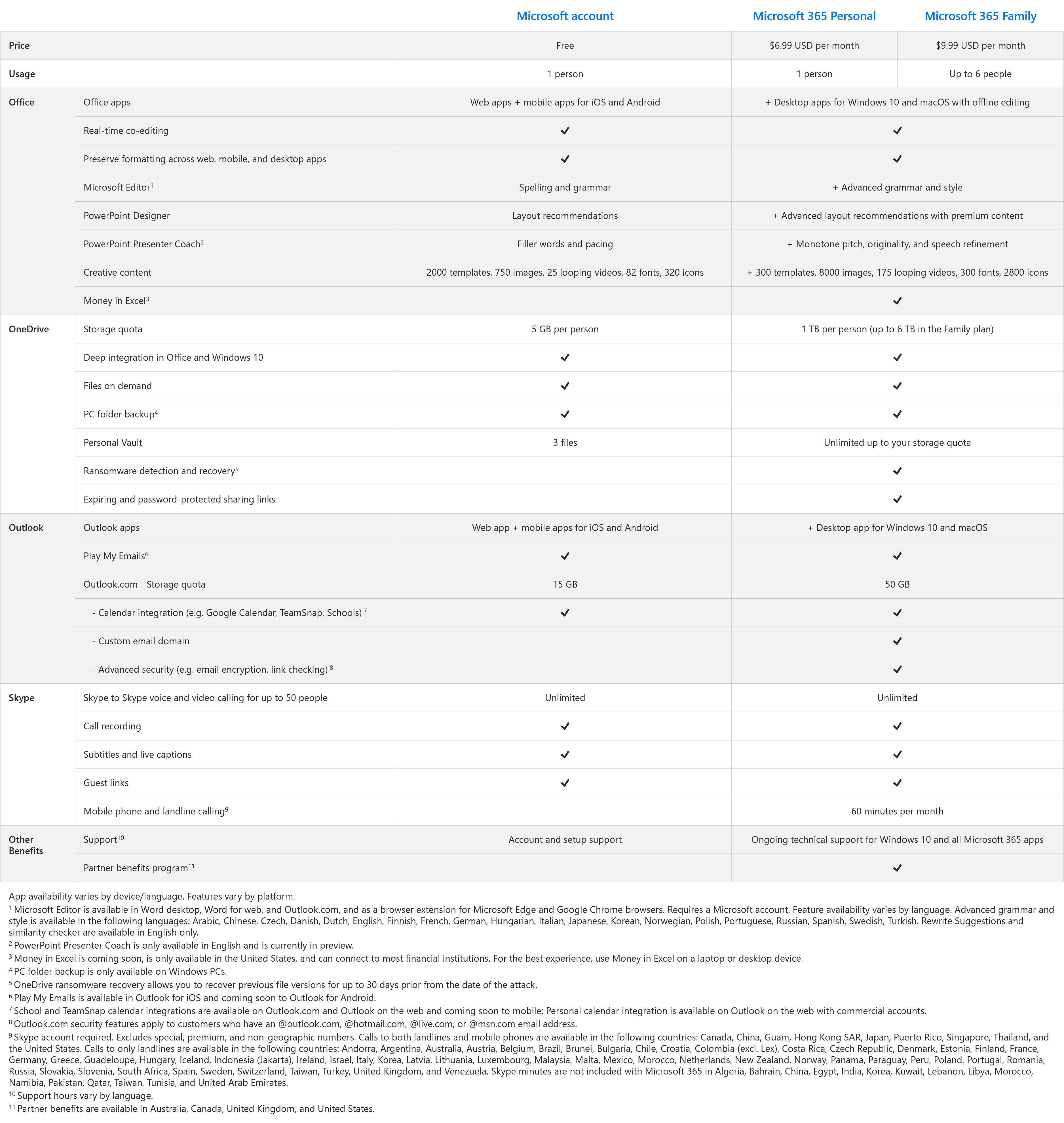
Keeping a handle on all the features and service tiers of Microsoft licenses and products is a challenge even for the best of us. This month Microsoft made two announcements regarding Microsoft 365 products. The first is that there are now Microsoft 365 Personal and Family Subscriptions, and the second is a rebranding of the Office 365 Business License names.

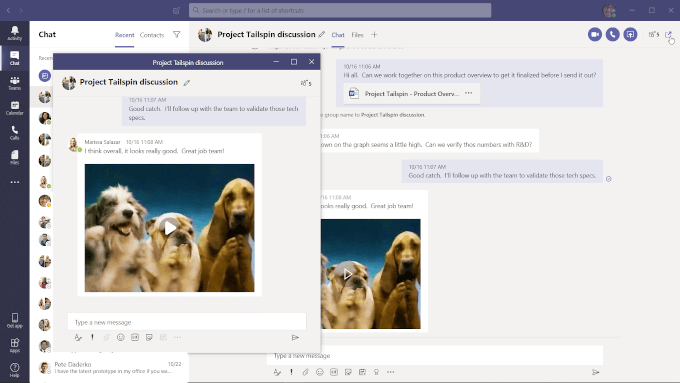
Office 365 products primarily target the small and medium enterprise market. To tap into the dramatically accelerating remote work trend, Microsoft has provided a consumer level license that contains the basic office productivity applications like Word, Excel, and PowerPoint, as well as Outlook (email), Teams (chat and video calling), and OneDrive (cloud file storage). A link to the license breakdown here. These licenses became available on March 30th, 2020.

Ms Teams Chat With Dog Screenshots

For small and medium businesses Microsoft is introducing name changes on the Office 365 and 365 Business licenses. There will be no changes to the licenses themselves and the offerings contained in them. Below is a summary of the changes:

  • Office 365 Business Essentials will become Microsoft 365 Business Basic.
  • Office 365 Business Premium will become Microsoft 365 Business Standard.
  • Microsoft 365 Business will become Microsoft 365 Business Premium.
  • Office 365 Business and Office 365 ProPlus will both become Microsoft 365 Apps.

Both announcements are great. The personal and family tiers provide a direct comparable to what is provided through Google. Re-learning naming conventions is no fun, the new names are far more consistent making it easier for those new to the Microsoft license ecosystem to understand. A link to the announcement can be found here.

Solution Requirements

Episode 27

People and organizations have tremendous pain thresholds. Old processes, obsolete equipment, and antiquated software are prevalent in organizations, but other constraints prevent these problems from becoming a priority to be addressed. Hacks and workarounds are the band-aids that get workloads pushed through the system. For instance, one organization had a procedure with instructions to kill the power to their computer and try again when a specific error code popped up in their case management tool. Eventually, the pain accumulated past the breaking point and the root cause of the problem needed to be addressed. Where to start and how to start? To break it down, this blog will look at the problem through both a macro and a micro lens.

Knowing where to start is best determined through knowing where you are right now. For instance, if you were standing on the North Pole and went one kilometer south, one kilometer west, and one kilometer north, where would you be? If you are to apply the same directions anywhere else on the planet, your outcome would be different. Knowing where you are matters!

Let’s start at the macro picture. Consider people, processes, and technology. Modern businesses are dynamic, multi-dimensional ecosystems. They carry their own momentum, and often the structure of their technology resembles the communication structures of the organization. Engineering and marketing firms are likely going to have different approaches to common problems like human resources, accounting, and information management. The people and resulting culture will influence the structure of the solutions that get deployed. Is your organization siloed? Does each department have their own technology tools? Does work get tossed over the fence? Are your IT services centrally managed? Conversely, is your organization structure flat? Are there multiple software solutions for the same problem? Are there challenges getting data from one solution into another? Understanding these initial conditions is important as they define the organization’s capabilities and preferences.

Person Working On Laptop With Blueprints Displayed On The Screen

Now let’s look at the micro picture. Start by taking an inventory of the applications used within your organization and their workflows. It is important to understand the dependencies, choke points, and alternative pathways available. The documentation process can take time especially if processes are fragmented and heavily dependent on individuals filling the gaps. For instance, are there individuals in your organization that do amazing work but it is unclear what or how they do it? Greater clarity at this stage will ensure that future task prioritization is more effective.

Now it is time to investigate the future, starting with the macro. Future states can be commonly viewed as strategic plans that include both business and technology goals. Future states can be documented as strategic and IT plans, corporate vision documents, or road maps. Business goals could include growing revenue, entering a new market, or reducing inventory in process. Technology goals could include reducing downtime, increasing responsiveness, or enhancing security functionality. Future states are tricky as the external environment can change so rapidly that strategic plans can be rendered obsolete in a matter of months. The COVID-19 pandemic is a clear example of how an environment change can upend a long-term plan. However, concluding that strategic planning is pointless, sets organizations down a path where accomplishing long term goals are lost in favor of reacting to the current situation. “Be proactive over reactive” is commonly stated when strategic goals have been ignored for too long. How can we build agility into the strategic planning process? First it is important to note that future states are important tools to provide focus; however, to provide agility, the path to the goal cannot be defined linearly.

Grassy Pathway Between The Mountains

To provide a pathway toward a desired future state we need to document requirements. Let’s look at the micro view now. Good requirements contain user stories, acceptance tests, and wireframes. User stories typically read “As a SOME ROLE, I want to DO SOMETHING, so that I can get SOME BENEFIT”. User stories can be best thought of as translation tools, bridging the gap between business users and the technical staff responsible for developing the solution. Acceptance tests include the scenarios outlined in the user stories, “GIVEN condition 1, 2… WHEN I do STEP 1, 2… THEN, desired result 1, 2…”. These are important for testing and confirming the solution behaves as expected, and should ideally be tested automatically through tests written during development. Lastly, wireframes are simple drawings that provide mock-ups documenting the user experience.

With these tools, a body of work can be created and placed into a backlog, visible to all. The backlog is then prioritized to ensure that the current focus remains in alignment with the goals defined by the future state. If the environment changes, priorities and requirements can be shifted as required ensuring that the work remains on a path toward meeting the organization’s goals.

Committee Coding

Episode 26 – April Fools Edition

At MERAK we are a group of super-passionate techies who love to solve problems. We view ourselves as a small, yet mighty solution development agency, ready to alleviate your pain points and convert business opportunities into measurable results. For us to thrive at the intersection between rapid technological change and disruptive business strategy, we play at the forefront of innovative ideas. Over the years we have fostered an internal start-up culture that supports the flexibility that is needed to manage our ever-changing industry.

While development practices have changed over time, the challenge remains the same. How to produce quality working products with fewer resources? Development is both a function of quantity and quality. A popular method to increase the net output of high-quality features is Paired Programming, whereby two developers share one workstation. The advantages of pair programming allow developers to share problem solving, best practices, lessons learned, and catch mistakes. Two brains are better than one!

Crumbs On A White Table

At MERAK we kick this practice into overdrive by using our developed in-house methodology of “Committee Coding”. It is like having a continuous SCRUM meeting or what we affectionately call the Committee Coding Resource Upgrade Model (CCRUM). As a committee we draw on the best brains for each task or challenge, while simultaneously maintaining our agility as the development process is in a continuous state of iteration within the CCRUM.

It has taken us a decade to master. If your organization is interested in implementing Committee Coding, we have some pointers:

  • Appoint a committee chair (CCRUM Master): It is important to have an individual on the committee responsible for defining the vision, prioritizing needs, and acting as the primary liaison between stakeholders and the committee.
  • An agile committee should have no more than ten members: If there are too many committee members a project will lose its agility and grind to a halt. We did also find that having at least four members provides enough diversity of skills and worldviews to ensure that the best ideas rise to the top.
  • Form a sub-committee: An effective way to tackle highly specific work. For particularly messy problems, it is wise to form a temporary sub-committee. The sub-committee can free up some members to focus on other tasks.
  • Rotate committee members: By rotating members on and off, the committee process will maximize corporate learning. The practice is also effective at combating groupthink.

There is no clear best interpretation for managing the alignment of business strategy and technology development. However, having a clear understanding of your organization’s culture and competencies provide two critical elements that allow iterative development of an internal practice best suited to your needs.